An investigation into financial services Suspicious Activity Reports (SARs) has revealed the extent to which major banks continue to enable money laundering and corruption by continuing to process criminal transactions.
The first in a series of reports from BuzzFeed News and the International Consortium of Investigative Journalists (ICIJ) looked into the US Financial Crimes Enforcement Network (FinCEN), a part of the Treasury Department that deals with financial crimes and collects the millions of SARs produced by financial services firms when they find something suspicious.
Prior to the reporting, the actual details of few SARs had been revealed. The FinCEN files encompass more than 2,100 – flagging more than $2 trillion in transactions between 1999 and 2017.
“Western banks could have blocked almost any of them, but in most cases they kept the money moving and kept collecting their fees,” read the report.
Specifically, it found that Standard Chartered moved money on behalf of Al Zarooni Exchange, a Dubai-based business that was later accused of laundering cash on behalf of the Taliban.
HSBC’s Hong Kong branch allowed the WCM777 Ponzi scheme to move more than $15 million, even as the business was being barred from operating in three states.
Meanwhile, Bank of America, Citibank, JPMorgan Chase, American Express and others collectively processed millions of dollars in transactions for the family of Viktor Khrapunov, the former mayor of Kazakhstan’s most populous city, even after Interpol issued a Red Notice for his arrest.
HSBC and Standard Chartered shares both fell around three per cent on early morning trading in London.
The banks mentioned said they could not comment on specific transactions due to bank secrecy laws, with HSBC claiming that the information provided by the ICIJ is historical.
It added that starting in 2012, the bank embarked on a multi-year journey to overhaul its ability to combat financial crime across more than 60 jurisdictions, and by the end of 2017, the US justice department “determined that HSBC met all of its obligations”.
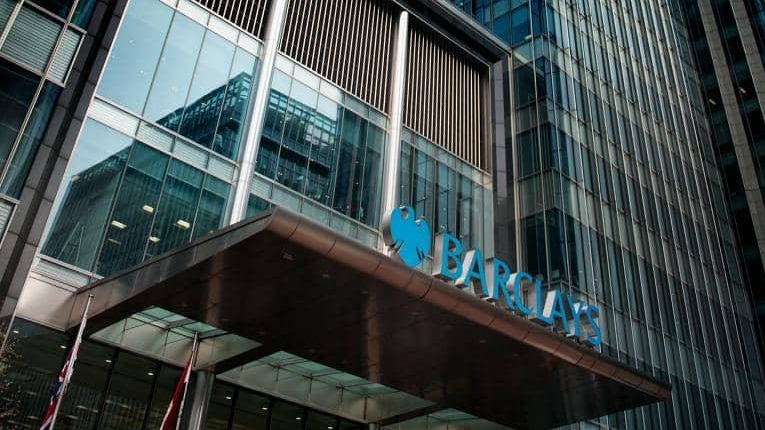
Barclays - also implicated in the story - responded: “Criminal activity which may seem obvious with hindsight is often only uncovered as a result of careful evidence gathering after the event in question has occurred or after a SAR has been filed... if we conclude we have financial crime concerns, we take appropriate action and have done so in numerous cases over the years.”
Standard Chartered said: “We take our responsibility to fight financial crime extremely seriously and have invested substantially in our compliance programmes.”
FinCEN’s general counsel told BuzzFeed News that disclosure of SARs can make banks less willing to file them, which “could mean law enforcement has fewer potential leads to stop crimes like human trafficking, child exploitation, fraud, corruption, terrorism, and cyber-enabled crime”.
A spokesperson for the Financial Conduct Authority (FCA) in the UK said that they were committed to ensuring money laundering regulations are fully adhered to "and won’t hesitate to take action where they are not".
They added: "At the moment, we have a number of investigations on foot into suspected civil and criminal breaches, these are progressing well and we expect we will be making decisions on some of them by the end of this year."
The regulator noted that its power to take action against money laundering is limited to misconduct that occurs within the UK jurisdiction, although it works with global regulators to combat financial crime.
Since 2017, there has been a significant increase in the number of open FCA investigations, with several notable penalties handed out, including a £163 million fine for Deutsche Bank over a money laundering controls failure; a £102 million fine for Standard Chartered also due to poor money laundering controls; and a £37 million fine for Commerzbank London earlier this year, again for money laundering failures.
Commenting on the news, Charles Delingpole, founder and chief executive of RegTech provider ComplyAdvantage, said that activity suggests that regulators are serious about cracking down on the proceeds of crime, and stemming the flow of this money through financial institutions.
"For example, the EU introduced the fifth Anti-Money Laundering Directive (5AMLD), which means companies risk fines of up to €5m or 10 per cent of annual turnover, if they fail to comply.
"Increasing numbers of companies are using financial crime detection technology to neutralise the risk of both their clients and themselves being unwittingly involved in money laundering, terrorist financing and/or corruption," he continued, adding: "Technology automates and improves many of the central and time-consuming tasks involved in identifying bad-actors, therefore substantially reducing risk."
Gilbert Verdian, founder and chief executive of blockchain company Quant, argued that the documents reveal that many of the world’s largest financial institutions have not only known about, but actively facilitated criminal activity.
“The reality is that with only human controls, there is always room for this kind of thing to happen, and the vastness of a borderless world has made the entire system harder to manage and sustain trust.”


Latest News
-
Gemini to cut quarter of workforce and exit UK, EU and Australia as crypto slump forces retrenchment
-
Bank ABC’s mobile-only ila bank migrates to core banking platform
-
Visa launches platform to accelerate small business growth in US
-
NatWest to expand Accelerator programme to 50,000 members in 2026
-
BBVA joins European stablecoin coalition
-
eToro partners with Amundi to launch equity portfolio with exposure to ‘megatrends’



Creating value together: Strategic partnerships in the age of GCCs
As Global Capability Centres reshape the financial services landscape, one question stands out: how do leading banks balance in-house innovation with strategic partnerships to drive real transformation?


Data trust in the AI era: Building customer confidence through responsible banking
In the second episode of FStech’s three-part video podcast series sponsored by HCLTech, Sudip Lahiri, Executive Vice President & Head of Financial Services for Europe & UKI at HCLTech examines the critical relationship between data trust, transparency, and responsible AI implementation in financial services.
Banking's GenAI evolution: Beyond the hype, building the future
In the first episode of a three-part video podcast series sponsored by HCLTech, Sudip Lahiri, Executive Vice President & Head of Financial Services for Europe & UKI at HCLTech explores how financial institutions can navigate the transformative potential of Generative AI while building lasting foundations for innovation.
Beyond compliance: Building unshakeable operational resilience in financial services
In today's rapidly evolving financial landscape, operational resilience has become a critical focus for institutions worldwide. As regulatory requirements grow more complex and cyber threats, particularly ransomware, become increasingly sophisticated, financial services providers must adapt and strengthen their defences. The intersection of compliance, technology, and security presents both challenges and opportunities.





© 2019 Perspective Publishing Privacy & Cookies
Recent Stories