The American President, Barack Obama is proposing major new curbs on the activities of banks to try to prevent future financial crises. He intends to restrict the size of banks and limit riskier trading practices by in essence re-instating a modernised version of the famous Glass-Steagall Act from the 1930s that separated out investment banking from retail banking. Although the thinking is clearly a version of 'back to the future', with Obama saying banks shouldn't be allowed to run hedge or private equity funds, or to make money from proprietary trading unrelated to serving customers, the detail is yet to be defined so if the industry is facing Glass-Steagall II is yet to be revealed.
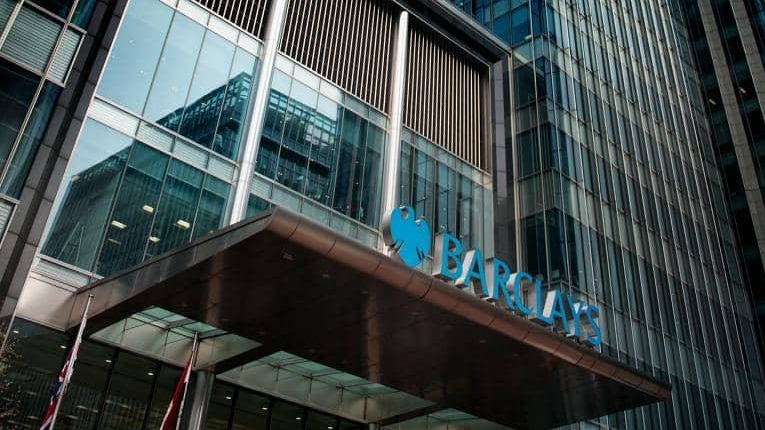
President Obama's plans are the most far-reaching yet to have arisen since the financial meltdown of October 2008. Sounding a tough note he said that the American taxpayer "would never again be held hostage by banks that are too big to fail", when unveiling his proposals recently on 21 January. He added that he was ready for a "fight" with any banks prepared to lobby against tougher regulations. Stocks in the US banks most threatened by any ban on using retail deposits to speculate on the markets, such as JPMorganChase and BoA Merrill Lynch, fell sharply with initial falls of six and a half per cent and 6.2% respectively. UK banks that follow the same integrated model and potentially face a break-up, such as Barclays and RBS, also fell upon the news, especially when shadow Chancellor George Osbourne welcomed the proposals and indicated any potential future Conservative government would adopt the same policy.
Everyone is now awaiting the detail of Obama's proposals to see just how proprietary trading is defined. This has lead the way in recent years in terms of innovation and technology spend as big institutions vied to put the fastest, best infrastructures in place to trade on the markets. If the regulations prove to be wholly then the 'Volcker rule' - named after the President's advisor Paul Volcker, ex-chair of the Fed, could merely come to be seen as political posturing in the wake of the Democrats lose of a congressional seat in Massachusetts and as a reaction to the vast profits and $10 billion worth of bonuses unveiled by Goldman Sachs on the same day [21st Jan]. Any proposals also have to get past Congress as well, of course, which is not guaranteed any more with the loss of Obama's absolute majority.
There does appear to be a trend here though with President's Obama's latest proposals following on from a $117 billion levy on banks announced earlier to recoup some of the bailout money spent rescuing the banks from collapse. It seems that the President wants to get tough with the financial sector and the consequences for the UK and the world will be profound.


Latest News
-
FCA plans to automate supervision and enforcement using AI
-
UBS ‘exploring options abroad’ after Swiss legislation changes
-
FSB calls for more oversight of agentic AI by financial institutions
-
Mastercard launches multi-money platform following BVNK acquisition
-
Starling to train AI model on UK sovereign cloud in banking first
-
Wall Street firms increasingly tying pay and promotions to AI, survey finds



Creating value together: Strategic partnerships in the age of GCCs
As Global Capability Centres reshape the financial services landscape, one question stands out: how do leading banks balance in-house innovation with strategic partnerships to drive real transformation?

Data trust in the AI era: Building customer confidence through responsible banking
In the second episode of FStech’s three-part video podcast series sponsored by HCLTech, Sudip Lahiri, Executive Vice President & Head of Financial Services for Europe & UKI at HCLTech examines the critical relationship between data trust, transparency, and responsible AI implementation in financial services.
Banking's GenAI evolution: Beyond the hype, building the future
In the first episode of a three-part video podcast series sponsored by HCLTech, Sudip Lahiri, Executive Vice President & Head of Financial Services for Europe & UKI at HCLTech explores how financial institutions can navigate the transformative potential of Generative AI while building lasting foundations for innovation.
Beyond compliance: Building unshakeable operational resilience in financial services
In today's rapidly evolving financial landscape, operational resilience has become a critical focus for institutions worldwide. As regulatory requirements grow more complex and cyber threats, particularly ransomware, become increasingly sophisticated, financial services providers must adapt and strengthen their defences. The intersection of compliance, technology, and security presents both challenges and opportunities.







© 2019 Perspective Publishing Privacy & Cookies
Recent Stories