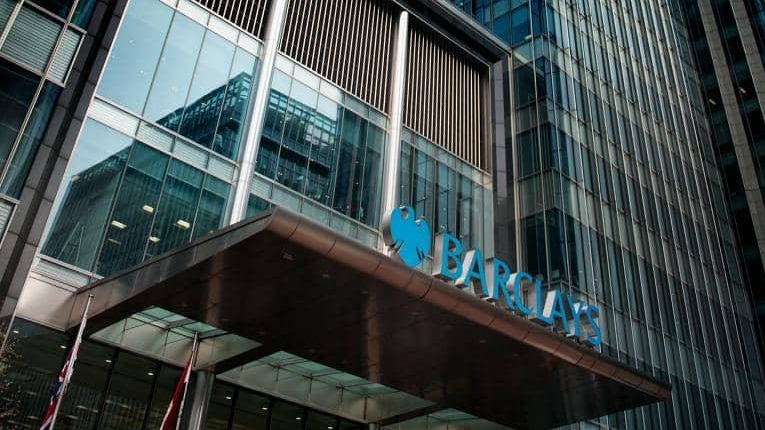
The Financial Services Authority (FSA) has issued its highest fine for retail failings, £7.7million, to Barclays for investment advice failings in relation to the sale of two funds.
Barclays is to contact customers and pay redress where appropriate.
Between July 2006 and November 2008, Barclays sold Aviva’s Global Balanced Income Fund and Global Cautious Income Fund to 12,331 people, with investments totalling £692million.
However, the way the funds were sold were deemed to have serious failings, including failure to ensure they were suitable for customers; failing to ensure sales staff had adequate training explaining the risks of funds; failing to ensure product brochures and other documents given to customers explaining risks and that could not mislead customers; and failing to have adequate procedures for monitoring sales processes and responding promptly when issues were identified.
Even though Barclays had identified potentially unsuitable sales as early as June 2008, the FSA said it did not take appropriate and timely action.
During the investigation, Barclays carried out a past business review, finding that 3,099 sales of the Cautious Fund and 3,378 were identified as requiring further consideration. Barclays has therefore already paid around £17million in compensation, and the FSA estimates that a further £42million could be paid to customers who received unsuitable advice.
“The FSA requires firms to have robust procedures in place to ensure any advice given to customers is suitable,” commented Margaret Cole, the FSA’s managing director of enforcement and financial crime. “Therefore, when recommending investment products, firms should take account of a customer’s financial circumstances, their attitude to risk and what they hope to achieve by investing.
“On this occasion, however, Barclays failed to do this and thousands of investors, many of whom were seeking to invest their retirement savings, have suffered. To compound matters, Barclays failed to take effective action when it detected the failings at an early stage.
“Because of this, and given Barclays’ position as one of the UK’s major retail banks, we view these breaches as particularly serious and fully deserving of what is a very substantial fine.”
However, the industry has not focused on the fine itself, but more the implications of Barclays’ failure.
“It’s about something far more serious, toxic and long lasting,” commented James Clark, banking expert at Pegasystems. “It’s about the bank’s reputation with customers, staff and shareholders. And it’s just about the last thing that Barclays needed right now.
“2010 and 2011 were meant to be all about recovering from the credit crunch, restoring trust and confidence, keeping a low profile and acting the part of a serious contributor to society and the economy with suitably bankerish deeds and words.”


Latest News
-
Visa and Mastercard win preliminary approval for $38bn swipe fee settlement
-
US Justice Department ‘issues subpoenas to major banks over alleged debanking’
-
Trump nominates Brian Johnson to lead consumer finance watchdog
-
Italy will support best Monte dei Paschi bid says economy minister
-
FSB urges financial institutions to impose strict controls on AI deployment
-
Lloyds expands AI fraud defences after blocking £1bn



Creating value together: Strategic partnerships in the age of GCCs
As Global Capability Centres reshape the financial services landscape, one question stands out: how do leading banks balance in-house innovation with strategic partnerships to drive real transformation?


Data trust in the AI era: Building customer confidence through responsible banking
In the second episode of FStech’s three-part video podcast series sponsored by HCLTech, Sudip Lahiri, Executive Vice President & Head of Financial Services for Europe & UKI at HCLTech examines the critical relationship between data trust, transparency, and responsible AI implementation in financial services.
Banking's GenAI evolution: Beyond the hype, building the future
In the first episode of a three-part video podcast series sponsored by HCLTech, Sudip Lahiri, Executive Vice President & Head of Financial Services for Europe & UKI at HCLTech explores how financial institutions can navigate the transformative potential of Generative AI while building lasting foundations for innovation.
Beyond compliance: Building unshakeable operational resilience in financial services
In today's rapidly evolving financial landscape, operational resilience has become a critical focus for institutions worldwide. As regulatory requirements grow more complex and cyber threats, particularly ransomware, become increasingly sophisticated, financial services providers must adapt and strengthen their defences. The intersection of compliance, technology, and security presents both challenges and opportunities.







© 2019 Perspective Publishing Privacy & Cookies
Recent Stories