The Competition and Markets Authority (CMA) has given provisional approval to Paypal’s $2.2 billion takeover of Swedish mobile payments company iZettle.
In November an investigation by the UK competition watchdog had raised concerns that the proposed merger could drive up prices for customers and lead to a more limited range of services.
The CMA had also been concerned about the potential impact of the merger in omni-channel payment services, where PayPal has already established a strong position and iZettle had been expanding its presence amongst mainly small and medium-sized businesses.
However, following an in-depth Phase 2 probe, including a survey of 6,000 customers, the CMA provisionally cleared the online payments giant to go ahead with its plans to take over the mobile point of sale (mPoS) device vendor.
The investigation revealed that, while iZettle and PayPal are two of the largest suppliers of mPoS devices, their customers are also willing to switch to ‘traditional’ PoS devices.
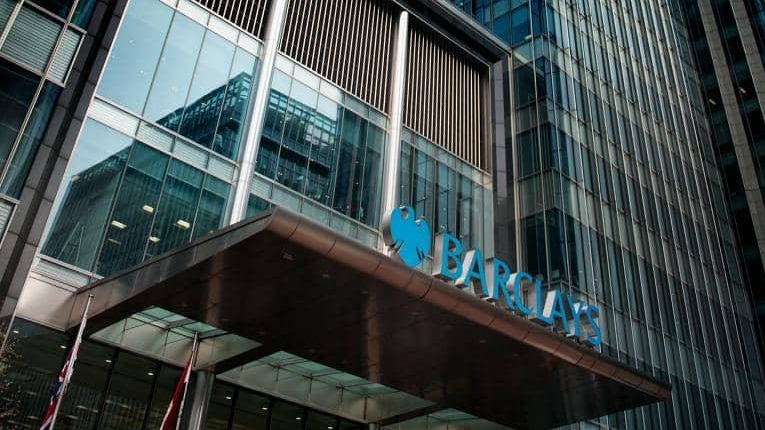
The two largest suppliers of payment services to smaller merchants, Worldpay and Barclaycard, account for almost 60 per cent of the market at present and will continue to constrain the merged company.
The merged company will also be likely to face significant competition from other mPoS-only players, such as Square and SumUp, which have both grown significantly in recent years, the CMA said.
Kirstin Baker, the inquiry chair for the CMA, said: “The payment services sector is dynamic, and our in-depth investigation has enabled us to carry out a large amount of further analysis about how competition is likely to develop in future.
“As iZettle is a relatively recent entrant to payment services, and PayPal had pre-existing plans to invest in its product offering, it has been particularly important for us to verify in detail what could have happened had iZettle not been taken over,” she continued.
“While iZettle and PayPal are two of the main suppliers of mobile point of service devices, the additional evidence we have analysed indicates that the distinctions between these and ‘traditional’ point of service devices are reducing over time and that large numbers of customers can and do switch to ‘traditional’ point of service devices.”
A final decision on the merger is expected by mid-June after collecting views on the provisional findings and assessing all evidence, the CMA said.
Dan Schulman, president and chief executive, of PayPal said he was pleased the CMA has provisionally cleared the transaction. “We look forward to adding iZettle’s products and services to our platform to help small businesses access even more affordable tools to run their shops and compete against the retail giants,” he added.


Latest News
-
Gemini to cut quarter of workforce and exit UK, EU and Australia as crypto slump forces retrenchment
-
Bank ABC’s mobile-only ila bank migrates to core banking platform
-
Visa launches platform to accelerate small business growth in US
-
NatWest to expand Accelerator programme to 50,000 members in 2026
-
BBVA joins European stablecoin coalition
-
eToro partners with Amundi to launch equity portfolio with exposure to ‘megatrends’



Creating value together: Strategic partnerships in the age of GCCs
As Global Capability Centres reshape the financial services landscape, one question stands out: how do leading banks balance in-house innovation with strategic partnerships to drive real transformation?

Data trust in the AI era: Building customer confidence through responsible banking
In the second episode of FStech’s three-part video podcast series sponsored by HCLTech, Sudip Lahiri, Executive Vice President & Head of Financial Services for Europe & UKI at HCLTech examines the critical relationship between data trust, transparency, and responsible AI implementation in financial services.
Banking's GenAI evolution: Beyond the hype, building the future
In the first episode of a three-part video podcast series sponsored by HCLTech, Sudip Lahiri, Executive Vice President & Head of Financial Services for Europe & UKI at HCLTech explores how financial institutions can navigate the transformative potential of Generative AI while building lasting foundations for innovation.
Beyond compliance: Building unshakeable operational resilience in financial services
In today's rapidly evolving financial landscape, operational resilience has become a critical focus for institutions worldwide. As regulatory requirements grow more complex and cyber threats, particularly ransomware, become increasingly sophisticated, financial services providers must adapt and strengthen their defences. The intersection of compliance, technology, and security presents both challenges and opportunities.





© 2019 Perspective Publishing Privacy & Cookies
Recent Stories