
Agenda
09:00 – 09:30: Registration & Welcome Refreshments
09:30 – 09:55: Opening Address: Building Trust in Open Source: How Lightwell is Changing Enterprise Security
Julio Guijarro |
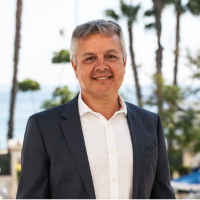
Open Source underpins the vast majority of enterprise technology, but the security model built around it is under serious strain. Published CVEs have grown by more than 520% since 2016, AI-powered tools can now identify critical zero-day vulnerabilities in hours rather than months, and fewer than one percent have been patched. Most large institutions are independently discovering the same flaws and fixing them in isolation, duplicating effort at significant cost while the broader ecosystem stays exposed.
In this opening address, Julio Guijarro argues that this coordination failure sits at the heart of enterprise security risk today, and examines what a more effective model looks like in practice. He introduces Lightwell, IBM and Red Hat's $5 billion software supply chain initiative, which is designed to break that cycle by delivering fixes that are production-ready, cryptographically signed, and contributed back to the originating Open Source projects rather than held as private forks that compound over time.
09:55 – 10:20: Keynote: AI for the Next Era of Banking
Dr. Richard L. Harmon |

The financial sector is rapidly shifting from early generative AI experimentation to deploying scalable, regulated solutions that drive tangible operational value.
In this session, Dr. Richard Harmon explores the frontier of Agentic AI and World Models—advanced technologies that move beyond basic chat interfaces to actively execute complex workflows, simulate market dynamics using diffusion models, and master predictive causality. To harness and scale these powerful innovations safely, Richard introduces the critical framework of "Engineered Trust," detailing how institutions can achieve true operational resilience by rigorously governing platform, model, and outcome integrity.
10:20 – 11:00: In Conversation: Technology, Operations and AI – Driving Banking Innovation
Jonathan Easton |
Wen Jie Lee |

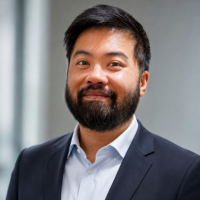
In this fireside chat, Wen Jie Lee, formerly Executive Director at UBS leading its Global Regulatory Change and Reporting Strategy function, draws on more than a decade delivering complex regulatory change across UBS, Credit Suisse, Deloitte and Barclays. The conversation with FStech Group Editor Jonathan Easton explores what it genuinely takes to operationalise AI in a regulated environment, moving from experimentation to real-world adoption without losing sight of controls, resilience and compliance. Wen Jie shares a practitioner’s view on where generative and agentic AI create tangible value across financial services, how modern regulatory platforms bring together data architecture, reporting and AI, and why sovereignty and operational delivery are now inseparable from innovation.
11:00 – 11:20: Coffee Break
11:20 – 11:45: Presentation: Digital Sovereignty: Powering Trust and Innovation
Sonel Popatlal |
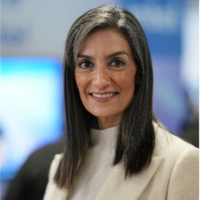
Geopolitical uncertainty, escalating cyber threats and mounting regulatory scrutiny are forcing financial services organisations to confront a fundamental question: who is truly in control of their data, technology and operations? As dependence on cloud and AI platforms deepens, sovereignty has shifted from a compliance consideration to a core strategic priority.
In this session, Sonel Popatlal, EMEA Category Leader Data Center & AI at Intel, sets out how the regulatory landscape is evolving beyond box-ticking towards demonstrable operational resilience – and what that means for the architecture decisions banks must make today. Drawing on a framework of control spanning data, technology, operations and assurance, Sonel examines the risks that keep technology leaders awake at night: cloud concentration, supply chain vulnerabilities, jurisdictional exposure and growing dependency on AI platforms.
The session also explores what genuine sovereignty requires in practice: not a retreat from cloud or AI, but a more deliberate approach to how those capabilities are adopted, governed and assured. Rather than treating sovereignty as a constraint on innovation, leading institutions are beginning to recognise it as the foundation that makes sustainable innovation possible – building architectures that preserve operational flexibility, reduce systemic risk and demonstrate control to regulators without sacrificing the agility that transformation demands.
11:45 – 12:10: Presentation: Payments – Growth Fuelled by Resilience
Ramon Villarreal |

The shift to immediate payments – clearing transactions in seconds, around the clock – has created a paradox: the faster payments move, the greater the consequences of any operational failure. Growth and resilience are no longer competing priorities; one is now the precondition for the other.
In this session, Ramon Villarreal, Payments Industry Lead at Red Hat examines what it takes to build payment infrastructure fit for a real-time economy. From eliminating legacy monoliths and ensuring application portability, to automation frameworks that detect and remediate anomalies faster than any human operator could respond, he sets out the architectural principles institutions must adopt and explores why sovereign AI, running entirely within a bank's own secure boundary, is becoming central to the payments stack.
12:10 – 12:50: Executive Panel: How Banks Are Making AI Operationally Real
Moderator:
Jonathan Easton |
Dr Audrey Adams |
Kyle Danko |
Ramy Erfan |



Turning AI ambition into operational reality remains one of the defining challenges for financial services technology leaders. While the strategic case for AI is well established, the harder questions concern execution: how do you deploy AI and Agentic AI responsibly within a regulated environment, support increasingly autonomous agentic workloads, integrate new capabilities with legacy infrastructure, and demonstrate measurable value at scale while maintaining compliance with evolving regulatory requirements, including GDPR?
This executive panel brings together senior practitioners from across the UK banking sector to move beyond the theoretical and share candid, experience-led perspectives on what operationalising AI actually looks like in practice. From governance frameworks, model risk management and data governance to compliance, cultural change and vendor selection, panellists will examine the decisions, trade-offs and lessons learned that do not always make it into the case studies. The discussion will also explore how banks are preparing their infrastructure, controls and operating models to support Agentic AI safely, securely and at scale.
12:50 – 13:00: Closing Remarks & Key Takeaways
Jonathan Easton |
13:00 – 14:00: Lunch
14:00: Close
Sponsor
Media Supporter